Morality, First. Politics, Second.
Nov 05, 2026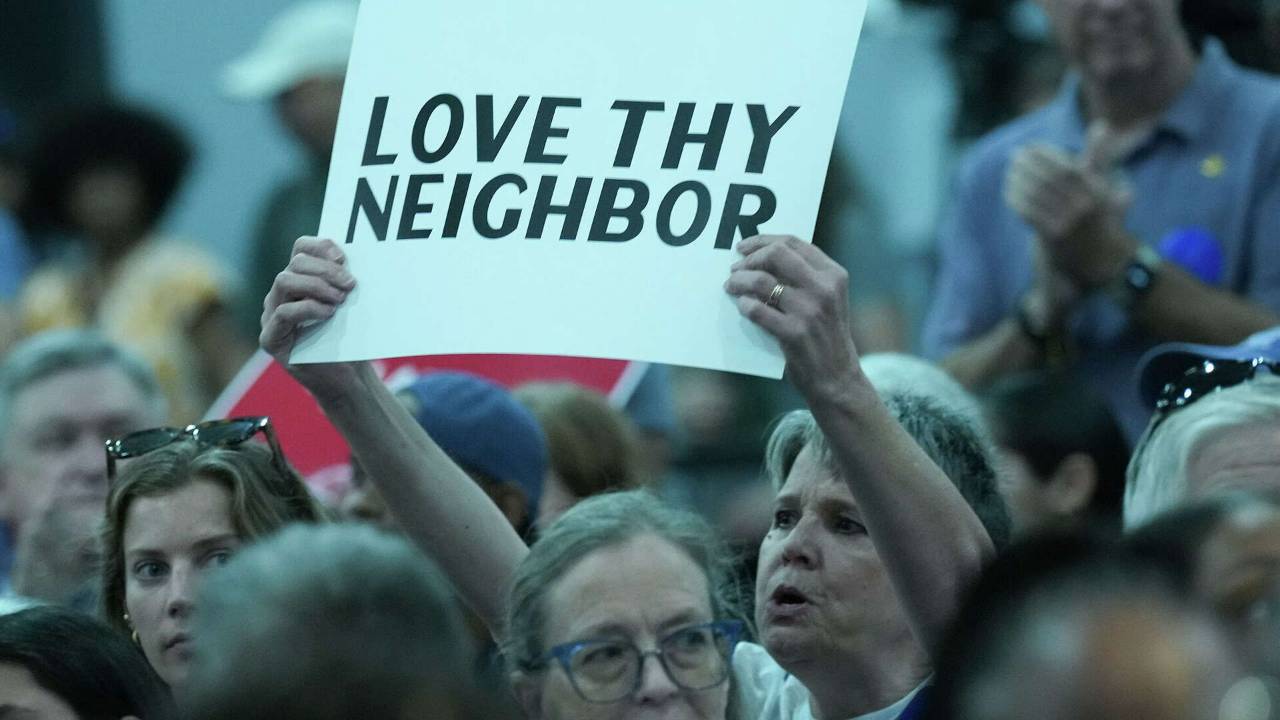
By Sarah Feely
My head is spinning as I write this. I went to bed too late Tuesday night, watching the pundits chatter on about the blue tsunami. I knew the mic had dropped, so to speak, but dang, did it feel good to watch. After 10 years of moral, political, social abhorrence after abhorrence, I feel hope on the horizon.
There were major wins for diversity. Georgia’s Keisha Lance Bottoms (D), the first Black woman ever elected governor. Florida’s Byron Donalds (R), the state’s first Black governor. Michigan’s Abdul El-Sayed (D), the first Muslim U.S. senator. New Mexico’s Deb Haaland (D) and Minnesota’s Peggy Flanagan (D), the first Native American women elected governor and U.S. senator. And in my home state of Texas, Gina Hinojosa (D), our first Latina governor.
The exit polls told a clear story. According to the NBC News Exit Poll, 39% of voters named the economy their top issue, and affordability was front and center: 62% said Trump is responsible for high prices. Another 32% named the state of democracy. 43% said opposing Trump was a reason for their vote. And 73% of voters under 30 and 64% of Latino voters backed Democratic candidates.
In the weeks to come, all this can and surely will be teased apart, analyzed, etc., by experts whose job it is to do so. It’s not mine, so I’ll spare us both.
My work is developing compassionate leaders and cultures, so my lens goes straight to the statement Americans made yesterday about morality.
The last 10 years have been a real feat of moral compartmentalization and gymnastics for many voters. Those who cast their votes for candidates spewing hatred, racism, sexism, and fear-mongering did so along political lines first, then reverse-engineered how their faith and/or moral compass fit into that political package (through impressive contortionism). (As an aside, I highly recommend Jonathan Haidt’s The Righteous Mind: Why Good People Are Divided by Politics and Religion if you want brilliant, eye-opening insights into how people vote the way they do.)
James Talarico, now the senator-elect from Texas, got at this when he talked with Ezra Klein. “Who are we as human beings? Where do we come from? Why are we here? How should we live? The politics should grow out of that.”
I also thought about my friend and former ABC News religion correspondent, Peggy Wehmeyer. She wrote a personally courageous piece for The Dallas Morning News in 2025 about the people in her own faith-based community who voted for Trump. She asked what they were willing to do about the evil they’d accepted in voting for what they saw as the lesser of two evils. I keep coming back to that question today. It’s worth asking of the people we voted for yesterday, too.
People went to the polls thinking about what it costs to live in America today, the war in Iran, ICE shootings. I still think at our core, many of us voted for love and decency. We went into the voting booth asking what we owe our neighbors, what America at its best stands for, and then voted for the people we thought would do something about it.
Whether you’re a three-time Trump Republican who crossed over yesterday or a self-described democratic socialist à la New York City Mayor Zohran Mamdani, maybe the common thread was simple: enough with the hate.
James Talarico ran on a message of “Love thy neighbor.” Three words. A message most of us know, though it hasn’t been so straightforward in today’s complex world. The path forward will be hairy as we find our way back to simple truths about compassion, love, peace, and respect, and choose the politics that fit inside them. But today, we celebrate love.
Stay connected with news and updates!
Join our mailing list to receive the latest news and updates from our team.
Don't worry, your information will not be shared.
We hate SPAM. We will never sell your information, for any reason.
